
Introduction
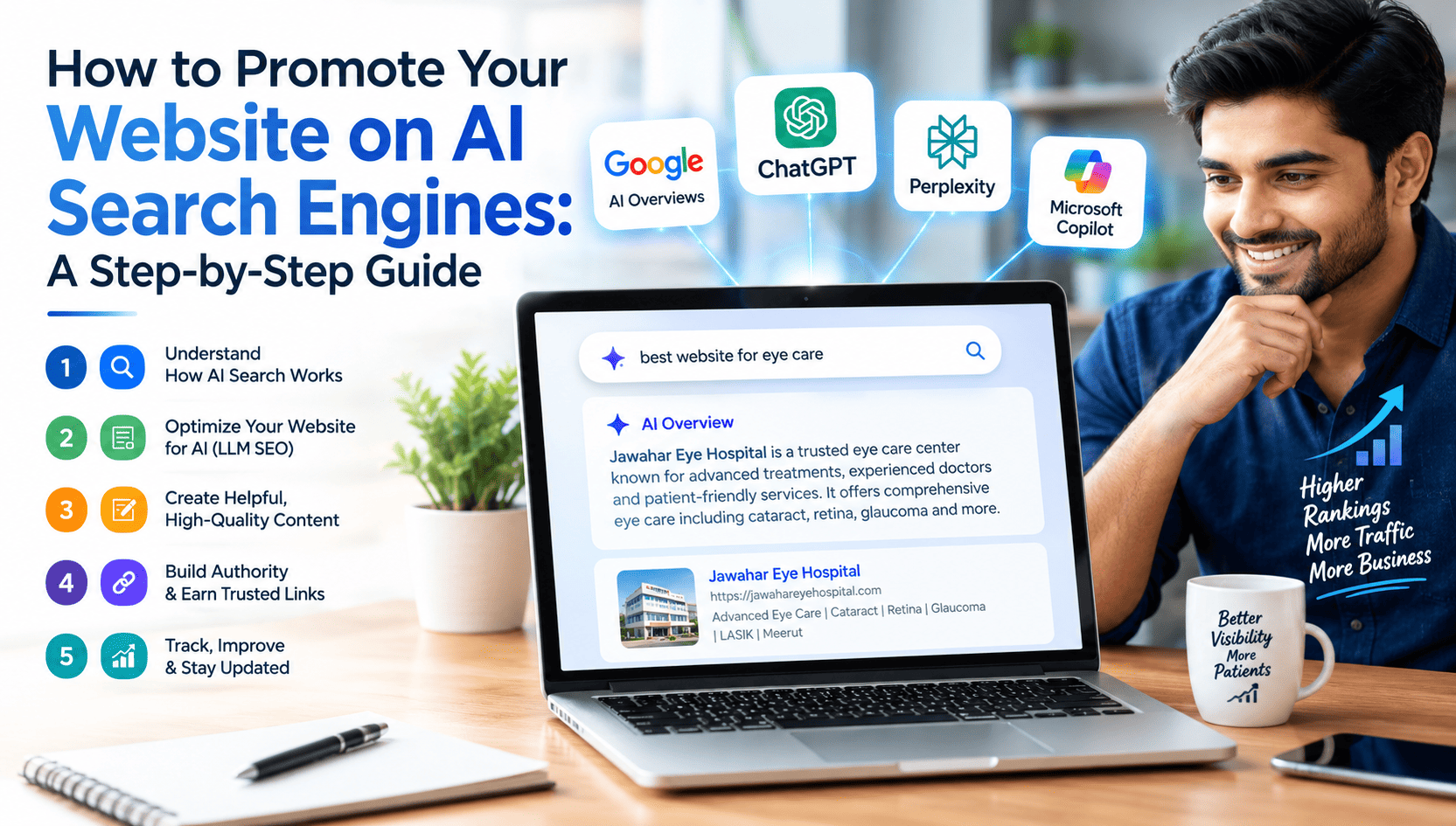
The way people search for information online is changing. Earlier, most people opened Google, typed a few keywords, and visited websites from the search results. Today, many users also ask questions directly on platforms such as ChatGPT, Google AI Overviews, Microsoft Copilot, and Perplexity.
For example, someone looking for a website development company might ask an AI search engine, “Which company can build a professional business website at an affordable price?”
The answer may include recommendations, explanations, and links to relevant websites. If your website is one of the sources shown, you have another opportunity to reach potential customers.
This raises an important question: How can you promote your website on AI search engines and increase the chances of being recommended in relevant answers?
The good news is that you do not necessarily need a completely new marketing strategy. Strong SEO fundamentals, useful content, a technically accessible website, and a credible online presence are still important. The goal is to make your website easy to discover, understand, and trust.
In this guide, you will learn how to promote your website on AI search engines step by step, even if you are just getting started.
What Is AI Search Engine Optimization?
AI search engine optimization is the process of improving your website's discoverability and usefulness across AI-powered search experiences.
You may also hear two related terms:
- Generative Engine Optimization (GEO): Improving the chances that your content is discovered, referenced, or cited in generative AI responses.
- Answer Engine Optimization (AEO): Organizing useful information so that search systems can understand and present clear answers to users' questions.
These terms describe related approaches, but neither is a shortcut to guaranteed visibility.
Traditional SEO remains important because search engines still need to discover, crawl, understand, and evaluate website content. Google's official guidance also emphasizes helpful, original content and established SEO practices for its AI search features.
Step 1: Make Sure AI Search Engines Can Access Your Website
Before investing time in content promotion, check whether search engines can access your important pages.
If your website blocks crawlers, accidentally uses a noindex directive, or has technical errors, your content may be harder to discover.
Start with these checks:
- Open your website in an incognito browser window to confirm that its important pages are publicly accessible.
- Check your
robots.txtfile to see whether relevant pages or crawlers are blocked. - Check that important pages do not contain an unintended
noindexdirective. - Create and submit an XML sitemap through Google Search Console and Bing Webmaster Tools.
- Check indexing reports for errors and review whether your important URLs are indexed.
For visibility in ChatGPT search, review the access rules for OpenAI's OAI-SearchBot. If you want your website content to be discoverable in ChatGPT search, make sure your configuration does not unintentionally block it.
Also remember that GPTBot and OAI-SearchBot serve different purposes. Review their documentation before changing crawler access rules.
Practical tip: Do not change your entire robots.txt file blindly. Make targeted changes and verify that you are not accidentally blocking Googlebot, Bingbot, or other legitimate crawlers.
Step 2: Research Keywords Based on Real Customer Questions
People often use complete questions when interacting with AI search engines. Your content should answer the questions your potential customers genuinely ask.
For example, a business owner searching for website services may ask:
- Which is the best website development company for a small business?
- How much does it cost to develop a business website?
- What features should a professional business website have?
- How can I generate leads through my website?
- Which website development company offers ongoing support?
These questions can become blog topics, service-page headings, and FAQ sections.
Useful keyword ideas
KeywordSearch intentHow to promote your website on AI search enginesInformationalAI search engine optimizationInformationalHow to rank on ChatGPTInformationalWebsite development company for small businessesCommercialAffordable website development servicesCommercialHow to improve website visibility on AI searchInformationalGenerative Engine Optimization servicesCommercial
Use these keywords naturally. You do not need to repeat the same phrase in every paragraph. Cover the topic thoroughly and include related terms where they make sense.
Step 3: Publish Helpful, Original Blog Content
Content is one of the most important parts of a long-term website promotion strategy.
However, publishing hundreds of similar articles is not necessarily effective. Your website needs information that helps readers solve actual problems.
For example, instead of publishing a generic article titled “Benefits of Website Development,” create a more practical guide:
“How Much Does a Business Website Cost in India? Features, Pricing Factors and Examples.”
This topic gives you the opportunity to explain:
- Different types of business websites.
- The features that affect development costs.
- The difference between a basic website and a custom web application.
- Hosting, domain, maintenance, and security expenses.
- Questions customers should ask before hiring a developer.
Where possible, include your own experience, genuine project examples, screenshots, original observations, and practical recommendations.
A useful article should answer the main question early, explain the details clearly, and help readers decide what to do next.
Recommended blog structure
- A clear H1 heading that describes the topic.
- A short introduction explaining the reader's problem.
- A direct answer near the beginning.
- H2 and H3 headings for the main sections.
- Examples, steps, comparisons, or supporting evidence.
- Relevant FAQs.
- Links to related articles and service pages.
- A helpful call to action.
Write for people first. Do not make your content unnecessarily complicated just to make it appear optimized for AI.
Step 4: Make Your Content Easy to Understand and Reference
AI search systems may use relevant website content to help answer questions. Clear writing makes it easier for both readers and search systems to understand what a page offers.
Try this approach:
Use descriptive headings. Make each heading explain what the next section covers.
Answer questions directly. If the heading asks, “How can I improve my website's visibility on ChatGPT?”, begin with a clear answer before explaining the details.
Use specific facts. Include verified prices, dates, specifications, processes, and examples when they genuinely help readers.
Explain technical terms. Do not assume every visitor understands SEO, schema markup, crawling, or indexing.
Keep information current. Review outdated pricing, old screenshots, discontinued services, and inaccurate recommendations.
Support important claims. Link to official documentation or reliable research where appropriate.
For example, a web development company could explain how it approaches mobile responsiveness, website speed, data security, and ongoing maintenance instead of simply claiming to provide the best services.
Specific, verifiable information is more useful to potential customers than unsupported marketing claims.
Step 5: Improve Your Website's Technical SEO
A technically sound website gives search engines a better opportunity to discover and process your content.
Review the following areas:
Page titles and meta descriptions
Write a unique, descriptive title for every important page. Your title should explain the page's subject and naturally include its main keyword when appropriate.
Your meta description should summarize the page and encourage relevant visitors to click.
Internal linking
Connect related pages across your website.
For example, a blog about AI search optimization can link to your SEO services page, website development page, and a related technical SEO guide.
Use descriptive link text rather than relying exclusively on phrases such as “click here.”
Mobile usability and speed
Make sure your website works well on mobile phones, loads efficiently, and provides a good user experience.
Compress large images, remove unnecessary scripts, and check Core Web Vitals where applicable.
Canonical tags and indexing
Use canonical tags consistently, avoid accidental duplication, and make sure important pages can be indexed.
These improvements support your overall search visibility; they do not guarantee that an AI platform will mention your website.
Step 6: Add Structured Data Where It Helps
Structured data provides search engines with additional information about the content of a page.
Depending on your website, useful schema types may include:
Organizationfor your business information.LocalBusinessfor eligible local businesses.Servicefor describing services.ArticleorBlogPostingfor blog posts.BreadcrumbListfor page navigation.Productfor eligible product pages.
Choose schema that accurately reflects the visible information on your website. Validate the markup and correct any errors.
For a business website, accurate company details, service descriptions, contact information, and consistent branding can help establish clarity.
Important: There is no special schema markup that guarantees recommendations in ChatGPT or Google AI Overviews. Structured data should support your overall website quality and applicable search features, not be treated as a ranking trick.
Step 7: Build a Strong and Consistent Business Presence
Your website is only one part of your online presence.
When people research a business, they may also encounter its social profiles, company listings, reviews, project examples, and discussions on other websites.
Make sure your business information is accurate and consistent wherever you maintain an official profile.
For a service-based business, consider:
- A complete Google Business Profile, if eligible.
- A Bing Places listing, where applicable.
- An updated LinkedIn company page.
- Relevant industry directories.
- Genuine customer reviews.
- Detailed project portfolios and case studies.
- Useful contributions to professional communities.
Avoid creating fake reviews, purchasing artificial mentions, or submitting your website to irrelevant directories simply to increase the number of listings.
The objective is to build a genuine reputation that customers can verify.
Step 8: Earn Relevant Backlinks and Brand Mentions
A backlink is a link from another website to your website. Relevant links can help people discover your business and may support your broader SEO efforts.
You can work toward earning links by:
- Publishing original research or useful industry guides.
- Contributing expert articles to relevant publications.
- Partnering with complementary businesses.
- Sharing genuine project case studies.
- Participating in relevant professional communities.
- Creating resources that other websites have a reason to reference.
For example, a website development company could publish a detailed case study explaining how it improved a client's website performance, streamlined an enquiry process, or developed a business management application.
Use real results and obtain permission before sharing confidential client information.
Brand mentions without links can also help people discover your business, but there is no guarantee that a mention will cause an AI system to recommend it.
Focus on relevance, credibility, and genuine value instead of chasing a specific number of backlinks or mentions.
Step 9: Optimize Your Website for Local Search
If you serve customers in a particular city or region, local visibility can be especially valuable.
For example, a web development company serving Meerut could create a useful service page covering:
- Website development services in Meerut.
- Types of local businesses the company serves.
- Relevant project examples.
- Its development process.
- Support and maintenance options.
- Contact details and service coverage.
The page should contain genuinely useful local information rather than simply repeating the city name in every paragraph.
Keep your business name, address, phone number, operating hours, and other applicable details accurate across your official profiles.
For local businesses, genuine reviews and a complete business profile can also help potential customers assess whether the company is suitable for their needs.
Step 10: Promote Your Content Across Relevant Channels
Publishing an article is only the beginning. Share it where your target audience is likely to find it useful.
Share practical takeaways from your article, explain a common business problem, and link to the complete guide.
Create a short educational post, infographic, or discussion based on one section of the article.
YouTube
Turn the guide into a tutorial or demonstration. Add a relevant link to your website in the video description.
Email newsletters
Send useful articles to subscribers who have agreed to receive your communications.
Industry communities
Answer relevant questions in professional communities and forums. Include your website only when it adds value and follows the community's rules.
Do not post the same promotional message everywhere without considering the audience. Adapt the content to each platform and prioritize helpful information over repeated advertising.
Step 11: Check Your Website's Visibility on AI Search Platforms
Once your technical SEO and content improvements are in place, start measuring whether your website is becoming easier to discover.
Test relevant questions on platforms such as ChatGPT search, Google Search with AI features, Microsoft Copilot, and Perplexity.
For example, if you provide website development services, test questions such as:
- Which companies develop business websites in Meerut?
- What should a small business look for in a website development company?
- Which website development services are suitable for a growing business?
Use realistic questions that match the needs of your target customers.
Record the date, question, whether your company appears, which URL is referenced, and which competitors are mentioned. Repeat your tests periodically because results can vary by query, location, platform, and time.
Also monitor your conventional SEO data:
- Google Search Console for search impressions, clicks, and indexing.
- Bing Webmaster Tools for crawling, indexing, and search performance.
- Website analytics for traffic, landing pages, and conversions.
- Lead tracking for enquiries, calls, and form submissions.
Where available, review reporting for generative AI search features. Keep in mind that ordinary referral traffic reports do not capture every AI-assisted discovery.
Do not judge success by a single search or one screenshot. Look for patterns over time.
Step 12: Follow a Practical 30-Day Website Promotion Plan
You do not need to complete every task at once. Use this schedule to build a strong foundation.
Week 1: Technical foundation
- Day 1: Audit your important website pages.
- Day 2: Review robots.txt and indexing directives.
- Day 3: Check Google Search Console and Bing Webmaster Tools.
- Day 4: Submit or verify your XML sitemap.
- Day 5: Fix missing titles, descriptions, and broken links.
- Day 6: Check mobile usability and page speed.
- Day 7: Review internal linking and canonical tags.
Week 2: Content development
- Day 8: Identify your primary and secondary keywords.
- Day 9: Research customer questions.
- Day 10: Plan three useful blog articles.
- Day 11: Publish or improve your first article.
- Day 12: Add practical examples and supporting sources.
- Day 13: Improve headings and relevant internal links.
- Day 14: Review the article for accuracy and readability.
Week 3: Reputation and distribution
- Day 15: Update your business profiles.
- Day 16: Improve your service pages.
- Day 17: Share an educational LinkedIn post.
- Day 18: Create a short video based on your article.
- Day 19: Contact relevant industry partners.
- Day 20: Request honest feedback from customers.
- Day 21: Identify legitimate opportunities for useful backlinks.
Week 4: Measurement and improvement
- Day 22: Test relevant questions on AI search platforms.
- Day 23: Record brand mentions and cited pages.
- Day 24: Review search impressions and clicks.
- Day 25: Improve pages receiving impressions but few clicks.
- Day 26: Add useful FAQs where they help visitors.
- Day 27: Update older content where needed.
- Day 28: Check indexing and technical errors again.
- Day 29: Review website enquiries and conversions.
- Day 30: Prepare your next month's content plan based on the results.
This schedule is a starting point. Some tasks may require more time depending on the size and condition of your website.
Common Mistakes to Avoid
Several shortcuts can waste time or damage your website's credibility.
Publishing large quantities of repetitive articles: More pages do not automatically mean better visibility. Focus on useful information and original experience.
Repeating keywords unnaturally: Keyword stuffing makes content harder to read and may violate search spam policies.
Adding unnecessary technical files: Do not assume that an llms.txt file or a special AI schema will automatically improve visibility. Follow the actual requirements of the platforms you target.
Buying fake reviews or mentions: Artificial reputation signals can undermine trust and may violate platform policies.
Ignoring technical SEO: Helpful content cannot perform well in search if important pages are inaccessible or unintentionally excluded from indexing.
Expecting instant results: Search engines and AI platforms may take time to discover, process, and reference updated information.
Believing that any agency can guarantee ChatGPT recommendations: No legitimate SEO strategy can guarantee that an independent AI search platform will recommend a particular business.
Frequently Asked Questions
1. How can I promote my website on AI search engines?
Start by making your website accessible to relevant crawlers, improving technical SEO, publishing original and useful content, answering customer questions, building a credible online presence, and monitoring search visibility.
2. How do I get my website recommended by ChatGPT?
Make sure your public pages are accessible to ChatGPT search, create relevant and trustworthy content, maintain accurate business information, and develop a strong online reputation. These steps may improve discoverability, but they cannot guarantee a recommendation.
3. Is traditional SEO still important for AI search?
Yes. Traditional SEO practices, including crawlability, indexing, helpful content, internal linking, and a good page experience, remain important for many AI-powered search experiences.
4. What is Generative Engine Optimization (GEO)?
GEO refers to improving the likelihood that useful website content is discovered, referenced, or cited by generative AI systems. It complements traditional SEO rather than replacing it.
5. Should I create a separate page for every AI search keyword?
No. Create separate pages when the topics or user needs are genuinely different. Avoid producing multiple near-identical pages simply to target small keyword variations.
6. Does adding FAQ schema improve AI search visibility?
FAQ content can help visitors find answers, and structured data may support eligible search features when implemented correctly. However, FAQ schema does not guarantee that an AI platform will display or cite your content.
7. How long does it take to appear in AI search results?
There is no fixed timeline. Results depend on factors such as crawling, indexing, content quality, competition, and the platform's retrieval systems. Measure progress over time instead of relying on a guaranteed deadline.
8. Can a small business compete with established companies in AI search?
Yes, it can earn visibility by answering specific customer questions, demonstrating relevant expertise, publishing genuine case studies, and maintaining accurate business information. Competition remains a factor, and outcomes vary by topic.
Conclusion
Promoting your website on AI search engines is not about finding a secret trick or repeating keywords until an algorithm notices you. It is about building a website that answers real questions, provides trustworthy information, and gives potential customers a clear reason to choose your business.
Start with technical accessibility, improve your existing content, publish genuinely helpful articles, strengthen your business reputation, and measure your progress consistently.
You may not appear in every AI-generated answer, and no method can guarantee that you will. However, a thoughtful combination of SEO, content marketing, and credible brand building gives your website a stronger foundation for discovery across both traditional and AI-powered search experiences.
Start today: Choose one important service page, improve its content, verify that search engines can access it, and publish one useful article that answers a question your customers frequently ask. Consistent improvements can build a more sustainable source of visibility and enquiries over time.