
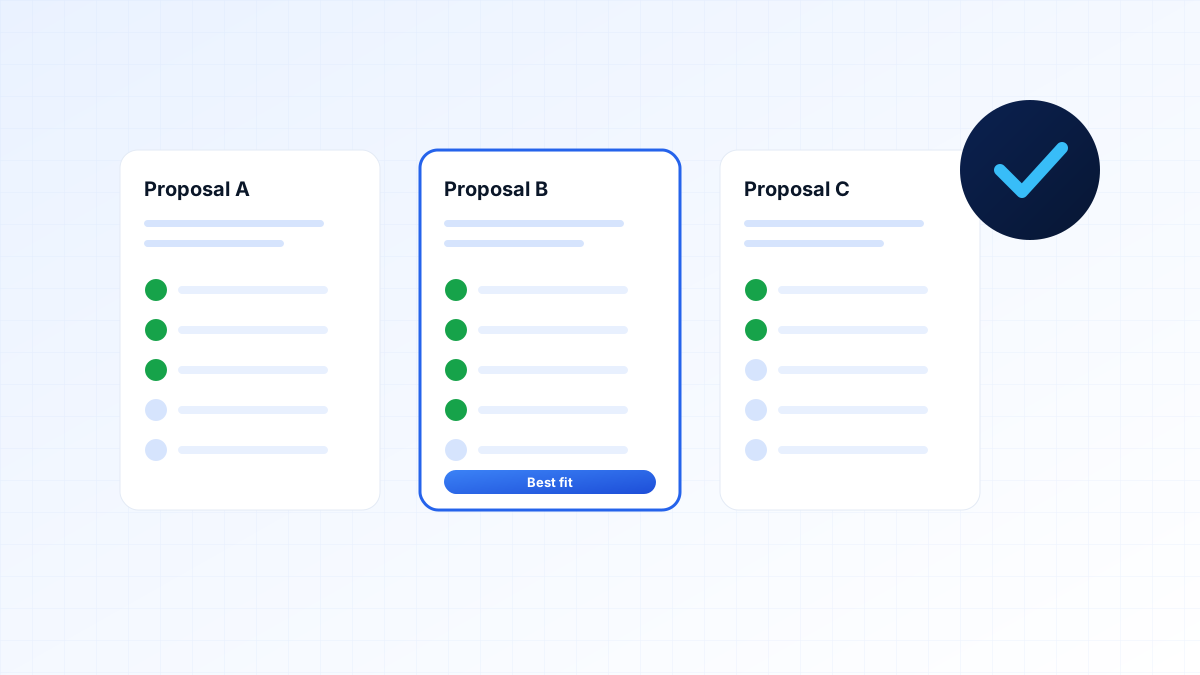
Choosing a software development company is one of the few technology decisions that is genuinely hard to undo. Once a team has spent months building your system, switching vendors means paying someone new to understand code they did not write. Most of the problems that surface later — missed deadlines, budget overruns, software nobody uses — can be spotted early if you ask the right questions before signing.
This checklist is written for business owners and managers rather than engineers. You do not need a technical background to use it.
1. Start with the problem, not the technology
Before speaking to any vendor, write down in plain language what is going wrong today and what "better" looks like. For example: "Our sales team loses track of follow-ups, and we cannot see which ad campaigns bring customers." That single sentence is more useful to a good development company than a list of features copied from a competitor's app.
Pay attention to how each company responds. A strong partner asks questions about your process, your users and your goals. A weak one jumps straight to technology choices and a price.
2. Look for relevant experience, not just a polished portfolio
Attractive screenshots show that a company can design screens. They do not show whether it can handle your workflows, data or integrations. Ask for examples closer to your situation:
- Have they built something with similar complexity — multiple user roles, approvals, payments or integrations?
- Can they explain a problem they faced on a past project and how they solved it?
- Is the software they built still in use, and do they still support it?
If possible, speak to one or two past clients. A five-minute call often tells you more than an hour-long sales presentation.
3. Ask how they will understand your requirements
Good software starts with a structured discovery phase: interviews with the people who will use the system, mapping current workflows and agreeing priorities. Ask each company what this phase looks like, who takes part and what you will receive at the end — typically a scope document, user flows and a phased plan.
Be cautious of fixed quotes given after a single short call. Either the scope is being guessed, or the estimate includes a large buffer you are paying for.
4. Understand the pricing model and how changes are handled
Requirements always evolve once people see working software. What matters is how that change is managed. The three common models are:
ModelWorks well whenWatch out forFixed priceScope is small, clear and unlikely to changeEvery change becomes a paid "change request"; quality can be cut to protect marginTime and materialsScope will evolve and you want flexibilityNeeds regular reporting and clear priorities to keep costs under controlPhased / milestone-basedYou want to start with the most valuable part and expandEach phase should have its own scope, estimate and acceptance criteria
For most business software, a phased approach gives the best balance: you get working software early, and later phases are estimated using real feedback rather than assumptions.
5. Check how communication and progress will work
Ask for specifics rather than promises of "regular updates":
- Who is your single point of contact, and will you speak to the developers when needed?
- How often will you see working features — every week, every two weeks, or only at the end?
- Will you have access to a staging link and a shared task board?
Frequent demos are the most reliable early-warning system in software projects. If something is heading in the wrong direction, you find out in days rather than months.
6. Confirm ownership of code, data and accounts
This point is often overlooked until a relationship ends badly. Make sure the contract states that you own the source code on payment, that code is stored in a repository you control, and that hosting, domain, app store and third-party accounts are registered in your company's name. Ask for documentation and deployment instructions as part of the handover.
7. Ask what happens after launch
Launch is the beginning of the software's life, not the end of the project. Clarify the warranty period for defects, what a support plan includes, expected response times for critical issues and how new features are estimated. A company that is vague about support may not plan to be around for it.
Red flags to watch for
- A detailed fixed quote before anyone has understood your process
- Reluctance to share past work or let you speak to clients
- No mention of testing, security or backups
- Unclear answers about who owns the code
- A price far below every other proposal without a clear explanation of why
A simple shortlist checklist
- They asked thoughtful questions about your business before discussing technology.
- They showed relevant work and offered client references.
- They proposed a discovery or planning phase with clear outputs.
- The pricing model and change process are written down.
- You will see working software every one to two weeks.
- Code, data and accounts will belong to your company.
- Support after launch is clearly defined.
If a company meets all seven points, you are likely looking at a partner rather than just a vendor. If you would like to see how BeGrids answers these questions for your project, book a free consultation — we are happy to be measured against this list.